Pack Converting & ASD Interview 2026
Headquartered in Japan, artience Group operates globally in the fields of polymers, organic pigments, functional coatings, as well as ink manufacturing.
Pack Converting & ASD Interview 2026
Questions Prepared Specifically for the artience Group & Toyo Printing Inks Feature
Headquartered in Japan, artience Group operates globally in the fields of polymers, organic pigments, functional coatings, as well as ink manufacturing. As part of artience Group, Toyo Printing Inks has further strengthened its position as a key production and distribution hub for the Middle East and African markets with the commissioning of its second plant in the Manisa Organized Industrial Zone.
1) At a time when recent developments in the Middle East are affecting raw material costs, could you tell us about Toyo’s cost and risk management strategies in response to these conditions?
Geopolitical developments in the Middle East are increasing cost volatility for critical inputs such as pigments, resins and specialty chemical raw materials. At Toyo Printing Inks, we address these risks not only through price management but also through a comprehensive supply and production strategy.
Our risk management approach is built on three main pillars:
First, we reduce our dependence on a single region through a multi-source procurement model.
Second, the commissioning of our new production facility in the Manisa Organized Industrial Zone has increased our production and inventory flexibility, thereby minimizing logistics-related risks.
Third, through our R&D activities, we are developing alternative raw material applications, formulation optimization solutions and low-migration systems.
In particular, LO/LM systems, vegetable oil-based solutions and next-generation formulations that enable efficient pigment utilization help us balance cost pressures while maintaining product performance.
2) One of the key focus areas of your work is the development of sustainable ink technologies that comply with regulations governing the European market, particularly for food packaging (GIO-compliant). How are the European Green Deal, the German Printing Ink Ordinance (GIO), and regulations introduced as part of the circular economy shaping your strategy and product portfolio for the transition toward bio-based and recyclable packaging inks?
The European Green Deal and GIO regulations have become fundamental drivers of product design in ink technologies, going beyond environmental compliance alone.
At Toyo, we are restructuring our product portfolio in line with this transformation. The key pillars of our strategy include:
low-migration LO/LM systems
water-based inks
vegetable oil-based offset solutions
mono-PE / mono-PP compatible products
recycling-friendly coating technologies
This approach not only ensures regulatory compliance but also directly contributes to our customers’ sustainable packaging objectives.
3) In response to the stringent requirements of the German Printing Ink Ordinance (GIO), Toyo Ink Europe developed and introduced the GIO LED series, comprising energy-curable, low-migration and food-safe inks. What advantages and opportunities does this series offer to converters?
The GIO LED series, developed by Toyo Ink Europe, responds to stringent regulations in Europe with its energy-curable and low-migration properties. From a converter’s perspective, three key advantages stand out:
The first advantage is lower energy consumption and more efficient production processes enabled by LED curing technology.
Secondly, its high print stability enables faster production and lower waste rates.
In addition, its low-migration properties provide safe use in food packaging applications.
In short, the GIO LED series is not merely an ink; it is an integrated system solution that enhances production efficiency.
4) Could you provide information about the Toyo Printing Inks (LP-9000 Toyo Life Premium Food LO/LM Series), developed at the Toyo Printing Inks R&D Center in Manisa as part of a TÜBİTAK-supported project and approved by the ISEGA Institute in Germany?
As Türkiye’s first dedicated ink R&D Center, Toyo Printing Inks employs more than 40 researchers and technical professionals specialized in their respective fields. Our center is capable of simultaneously conducting more than 10 R&D projects addressing the needs of different industries.
One of the key outcomes of these activities, the LP-9000 Toyo Life Premium Food LO/LM Series, is a next-generation ink series focused on food safety. It was developed with the support of TÜBİTAK and approved by the Germany-based independent testing and certification organization ISEGA Institute. The series has also qualified for the INDEGE certification for suitability for the deinking process, receiving a high score from an independent testing organization in Europe.
The product series stands out with the following features:
• Compliance with low-migration requirements
• High print stability
• Compatibility with recycling processes
• Consistent and high color performance across different printing machines
The LP-9000 Toyo Life Premium Food LO/LM Series offers an important solution for converters seeking to comply with increasingly stringent regulations and safety standards for food packaging, particularly in Europe. In this respect, the product is positioned as an innovative technology that addresses both sustainability and food safety requirements.
5) The innovative metal packaging solutions you exhibited at METPACK 2026 attracted considerable attention. Could you tell us more about the new coating technologies you have developed in this area?
The solutions we exhibited at METPACK 2026 are based on next-generation metal coating systems developed as a result of the R&D activities carried out at our R&D Center and the technological capabilities provided by our new production infrastructure in Manisa.
These coatings stand out with their BPA-free formulations, while combining high chemical and mechanical resistance, strong adhesion performance on metal surfaces and the barrier properties required for food-contact packaging applications. These technologies enhance product safety in metal packaging applications, particularly for the beverage and food industries, while also contributing to more sustainable and environmentally friendly production processes.
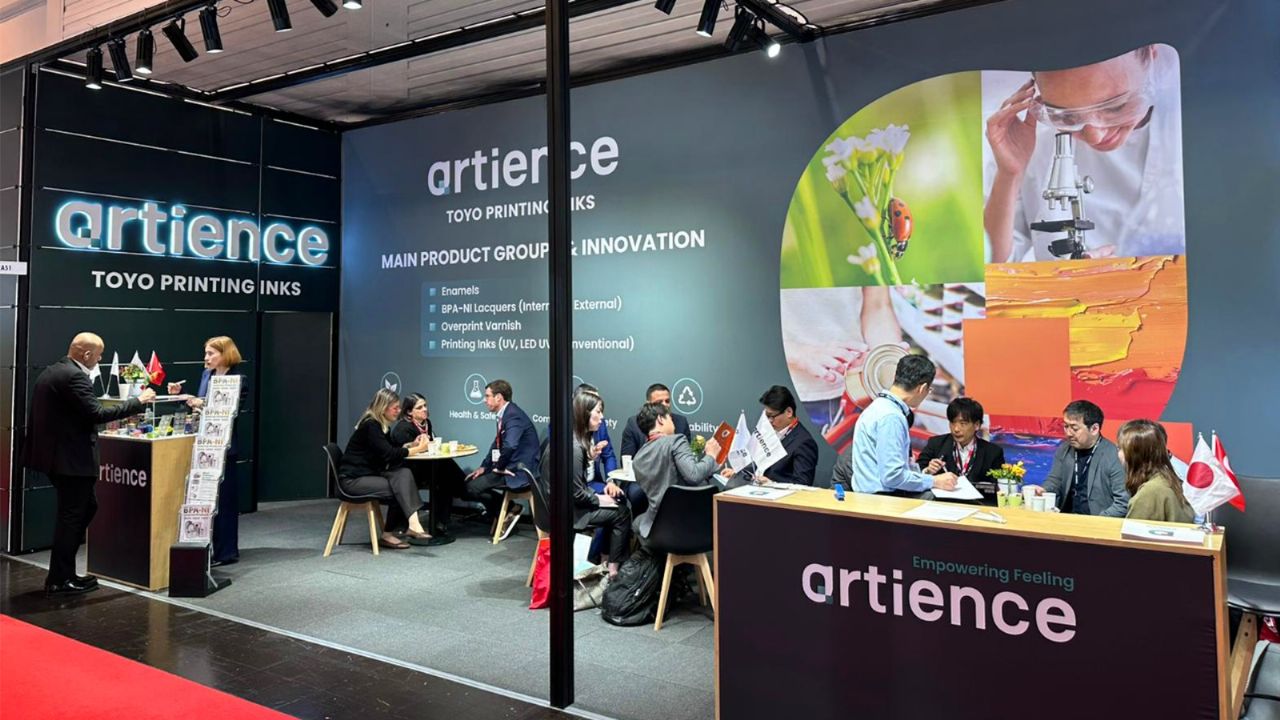
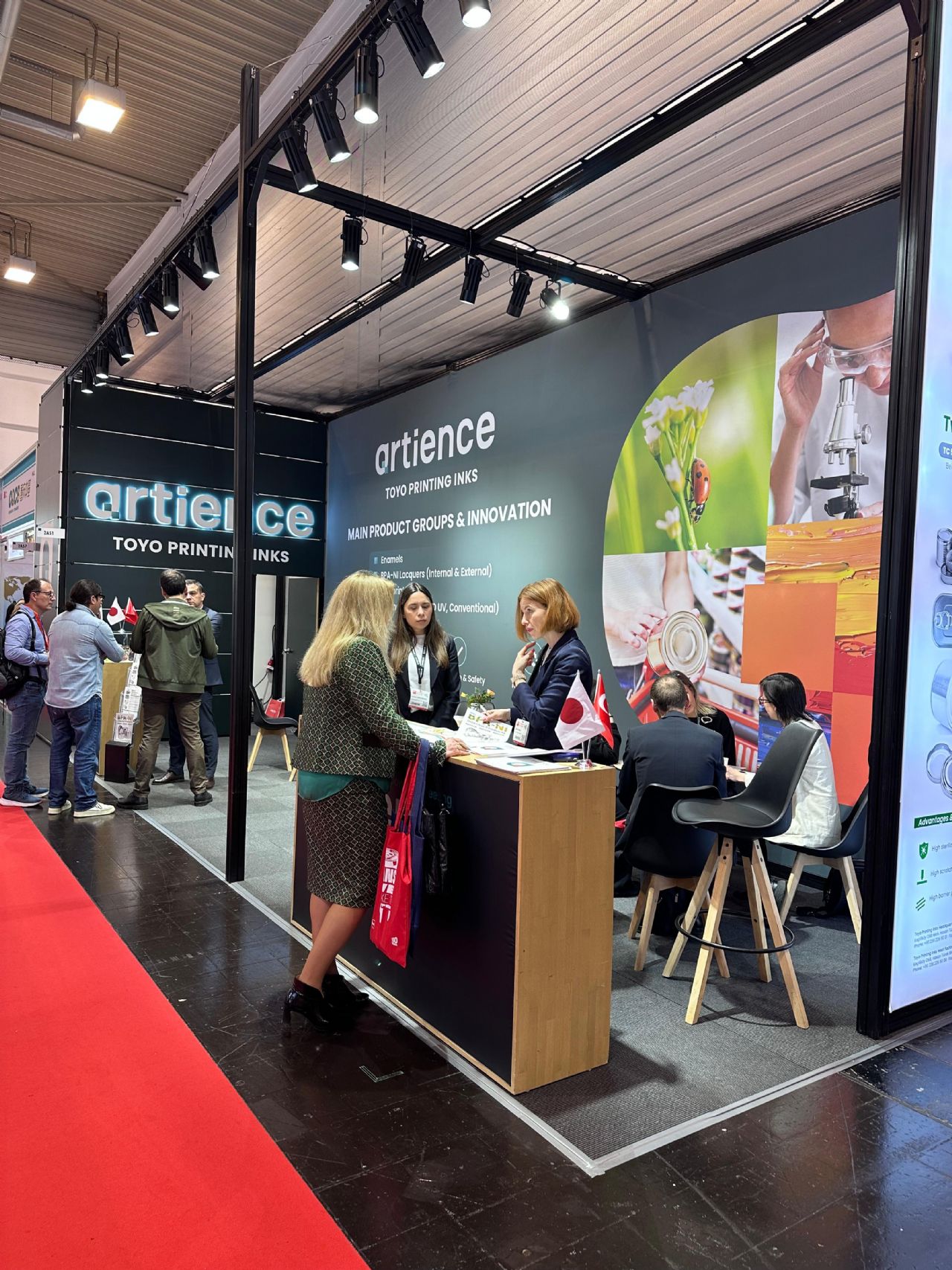
Within this framework, we also presented our product portfolio developed around BPA-NI internal coating technologies. In addition to the BPA-NI Gold Lacquer, BPA-NI Pigment Lacquer and BPA-NI Clear Lacquer product groups, our Conventional, LED UV and UV Metal Packaging Inks also attracted significant interest from industry professionals throughout the event. Our expert teams answered visitors’ technical questions and provided information on the features and application areas of our products throughout the exhibition.
6) Sustainability encompasses a holistic structure extending from packaging production to the delivery of packaged products to consumers and through to the post-consumer stage. Could you tell us about the importance of ink and the functions it performs within this sustainability chain?
Sustainability is no longer limited to packaging design; ink is a critical component of this chain.
Ink technologies are technical factors that directly affect:
• recycling efficiency
• deinkability performance
• food safety compliance
• carbon footprint
Therefore, the LO/LM systems, water-based inks and recycling-compatible formulations we develop constitute key components of the sustainable packaging chain.
7) What contributions are you making to the circular economy and recycling technologies? Could you provide information about your collaborations in this field and the results achieved?
At Toyo Printing Inks, we place the circular economy approach at the center of our product development processes.
Within this framework, we are developing:
• INGEDE 11-compliant deinkable inks
• mono-material packaging systems
• water-based and low-migration products
• recycling-compatible coatings
Through joint testing processes conducted with recycling organizations and converters in Europe, we validate our product performance under actual recycling conditions.
8) While our packaging industry is undergoing a significant transformation, the rise of digitalization and digital printing technologies is also attracting attention. The trend toward digital printing, which began with labels in Türkiye, has gradually expanded into the corrugated board and folding carton segments and has now reached the flexible packaging sector. In light of this transformation, does artience have any product development and R&D activities aimed at growing in the digital segment while maintaining its position in traditional markets?
Digitalization also represents an important strategic area on the R&D agenda of Toyo Printing Inks. While maintaining our strong position in conventional printing technologies, we are focusing particularly on water-based and UV systems on the digital side. In this context, we are working on next-generation digital ink solutions that meet low-migration requirements, are compatible with different substrates and provide high color stability.
This transformation has accelerated with the growing need for production flexibility and personalization. However, conventional printing technologies continue to remain the backbone of high-volume production.
As artience Group, we are particularly focusing our R&D activities for the digital printing segment on water-based and UV systems.
Within this framework, we are working on:
low-migration digital ink solutions
formulations providing high color stability
systems compatible with different printing substrates
Our aim is to maintain our strong position in conventional printing while also establishing a technically prepared product portfolio for the digital transformation.
9) Could you provide information about the contributions and opportunities offered by Toyo Printing Inks’ production hub in Manisa in supporting the transformation of packaging and label manufacturers in Türkiye toward global standards, sustainable production processes and the development of sustainable packaging solutions?
The USD 70 million new production facility commissioned in the Manisa Organized Industrial Zone has significantly strengthened Toyo’s regional production and R&D capabilities.
This investment has enabled us to:
double our production capacity
enable the local production of certain products that were previously imported
strengthen local production of LO/LM and water-based systems
increase inventory management and supply flexibility
integrate R&D processes into production more rapidly
This structure also strengthens Türkiye’s export capabilities to European and neighboring markets.
In summary, Toyo Printing Inks continues to develop next-generation ink technologies by combining the global technological strength of artience Group with local manufacturing capabilities, with a focus on sustainability, regulatory compliance and high performance.
In this regard, the new investment in Manisa is positioned not only as a facility that increases production capacity, but also as a regional innovation and supply hub.
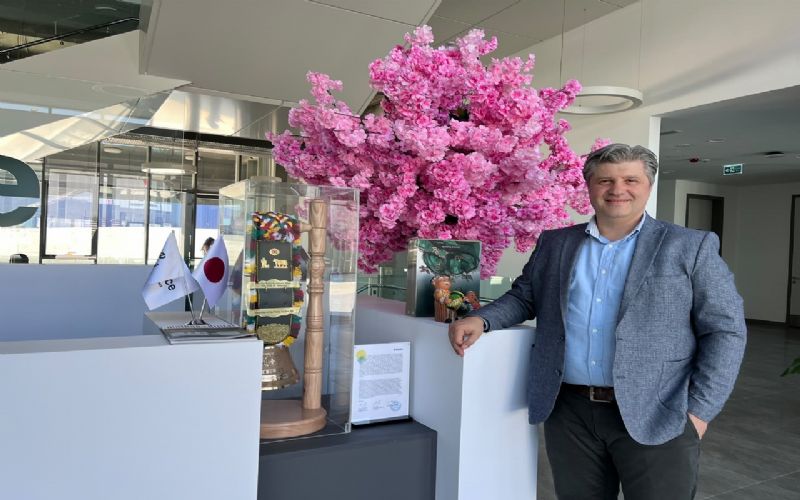
İsmail Yılmaz
Vice President of Sales and Corporate Strategy
Toyo Printing Inks Inc.